Opening gambit
Reflections on Omloop, Kuurne and a brand new format of a whole different sport, as cycling season 'proper' kicks off in Belgium

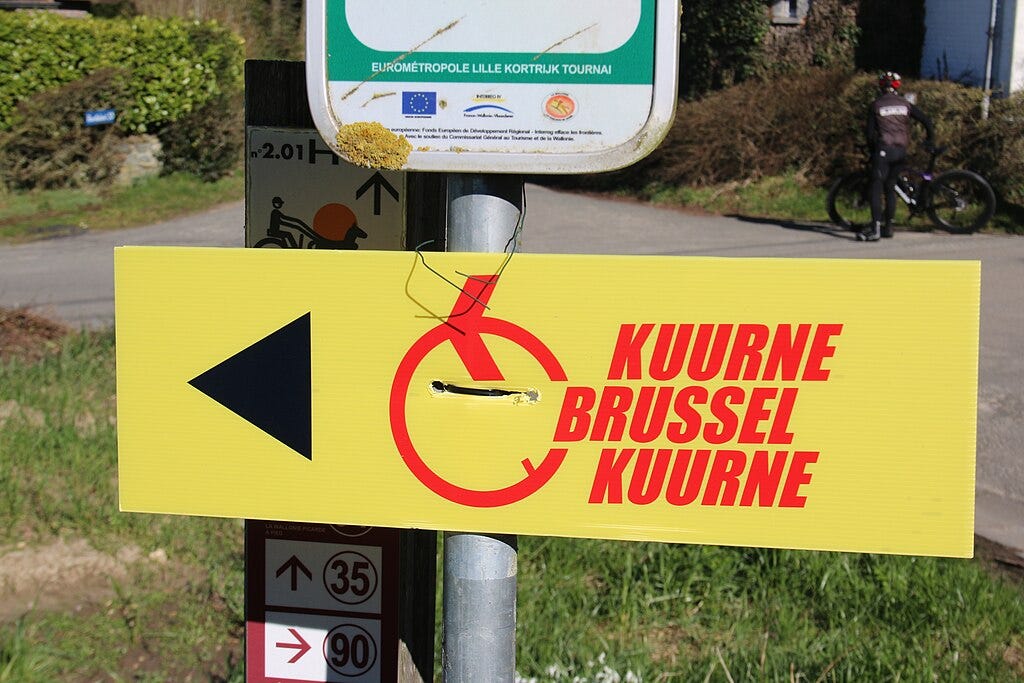
Another week, another post, and hopefully this is a sign of things to come, as the season heats up, and my writing habits settle back into a pattern. Opening Weekend came and went and by the time this post actually makes it out into the wild, Strade Bianche weekend will probably have passed by and we’ll be into the best week of the cycling year (on the men’s side at least) – Paris-Nice Tirreno-Adriatico week. More on why I love this week so much in the next post.
For now though, I’m going to break the habit of a lifetime and NOT waffle on for ages before I get to talking about cycling. I am reinforcing a new habit though – I’m going to talk about a different sport again. Don’t panic, it’s not as bad as it sounds – first off, I’m going to lead with the cycling this time, and second, the secondary sport content will link back to cycling in a roundabout way. Honest.
Anyway on with the meaty bit of the newsletter – if you’re enjoying my posts please share them with like-minded souls, and if you’d like to support the continuation of my circuitous ramblings, please consider becoming a paid subscriber – it’s a huge boost to have your support and it enables me to dedicate more of my time to exploring different angles within the sport, not just because they scratch an itch in my brain (although that is a pleasing side effect) but because different perspectives, ones that aren’t always covered in mainstream sports media, offer an alternative, one which might scratch an itch in your brain, too. That being said, let’s begin with today’s first topic: a look back at Belgian Opening Weekend.
Kuurne chameleon (you come and go)
Is today going to be governed by tenuous 1980s song references? Apparently, yes.
I’m starting out with what the kids five years ago liked to call a ‘hot take’. It may be no higher in temperature than your average quiche, to be honest, but hear me out. Every year, the hype for Omloop Nieuwsblad is off the charts. Opening Weekend rhetoric, with all of its countdowns and portents for the cobbled Monuments, necessarily casts Omloop Nieuwsblad in a far more romantic light than it sister race, Kuurne-Brussels-Kuurne. It’s partly because it’s the first of the spring Classics, and a turning point in the season – the first day of ‘real’ racing for the traditionalists – so naturally the spotlight falls on it more heavily. And I get it – not only is it our one chance of the year to see the iconic Muur van Geraardsbergen used in anger, it also happens to feature the same sort of pattern as the Tour of Flanders, in terms of the intensity of the challenges, that are clustered in the final third of the race, leading to a more obvious build in tension. It’s a much more natural foreshadowing of what’s to come in Holy Week, and attracts many of the names that will fight it out for glory at De Ronde.
Kuurne, by contrast, has in the past been considered more of a sprinters’ classic by dint of the fact that the final ‘helling’ comes with 60km still to race, theoretically offering plenty of time for the peloton to regroup ahead of the expected bunch sprint. Despite being slightly shorter and having a much flatter run-in, Kuurne actually features a considerable amount more climbing than Omloop – just over 2,000 metres of altitude are gained across the course compared with 1,600 the previous day – and in recent years, when combined with the current trend for men’s classics to be raced harder earlier, and to open up to attacks far sooner, this has had the effect of making Kuurne a much more balanced race, in terms of entertainment. There’s a fallacy that flat finishes can be boring, but the scales are so finely balanced in Kuurne that it creates an extremely satisfying viewing experience, regardless of the eventual style of victory. In fact, of the seven editions prior to 2026, four resulted in a win for the break, busting the myth that it’s a race for the sprinters (Omloop itself ended in a reduced bunch gallop last year, so isn’t immune to a fast finish).
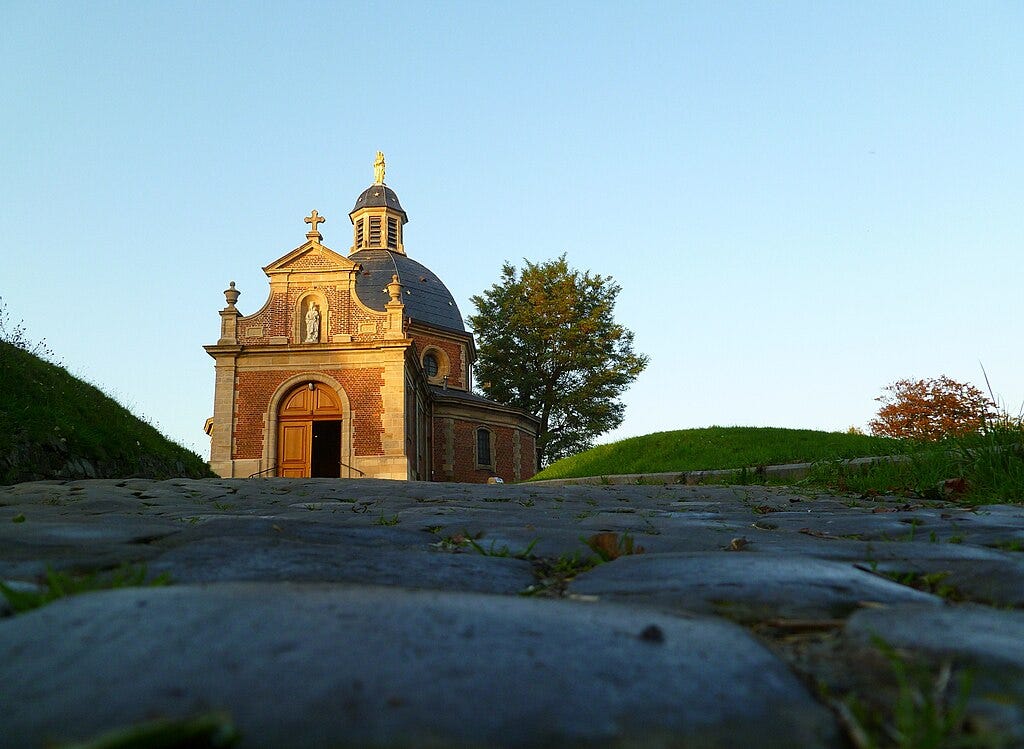
Kuurne’s route design invites attacking, with its many climbs clustered in the centre of the profile, including seriously tricky – and longer – climbs than Omloop, and most of them are a bit less hazardous than the likes of the Molenberg, which sees participants swing off of a main road onto a steep, narrow cobbled climb – arguably one of the most treacherous pinch points on the entire cycling calendar.
The heady cocktail of difficult challenges combined with a sprint-heavy peloton leads to a fascinating battle, with breakaway hopefuls and more versatile sprinters attacking on the climbs to try and drop the purer sprinters, whose teams must then go to work on the flat final section of the race to try and recoup their losses in time to bring about the bunch sprint outcome they desire. With some teams able to play multiple cards, the strategy involved adds yet another layer of intrigue, and when you throw into the mix the usual extraneous factors that the Belgian spring brings with it – namely crosswinds and rain – you have the recipe for a perfect race.
Of course, flat stages in Grand Tours can be a snooze-fest. When there are designated days for sprinters in a stage race it feels more pre-destined, and there’s less inclination to go against the grain, because most teams have other goals and riders to protect. With one-day Classics, there’s no tomorrow to worry about, so even the sprintiest ones can be absolutely scintillating. One of my favourite spring Classics in recent memory was the 2023 edition of Brugge-de Panne – the ultimate sprinters’ Classic – in which crosswinds, and Soudal-QuickStep, ripped the bunch apart, the weather was hideous, and it turned into an absolute slugfest between a motivated breakaway trio and a chasing group of superstar sprinters. It was brutal and brilliant in equal measure, and left many of the riders questioning their life choices following the race.
This year’s Kuurne was just as finely poised as most of the recent editions have been. It proved that the Classics-style sprinter is a different beast. The eventual winner, British hotshot Matthew Brennan, is not only rather rapid at the finish, but he has the capability not only of hanging on over the climbs, but of using them to make the race harder, duly dispensing with much of the competition in the process. Ably assisted by an array of motivated Visma teammates, Brennan instigated the late attacks that split the group and eventually caused the likes of Jasper Philipsen to make the kind of mistakes that saw him out of position at the finish. Philipsen himself made some questionable choices during the race, attacking on some of the climbs solo; it seemed as if he was trying to prove a point, but he could surely have used his team better and saved his matches to give himself a better shot at the finale. Decathlon also rode assertively, though they were unlucky in the end, not managing to position Tobias Lund Andresen as well as they could have for the final sprint. Nevertheless, the Dane recorded the most consistent performance over the two days of opening weekend, scoring two top tens – 6th at Omloop, and 7th in Kuurne (other candidates for most consistent include Tim van Dijke [Red Bull-BORA-hansgrohe] who finished 2nd and 13th, and the under-the-radar winner, EF’s Luke Lamperti, who recorded 10th and 9th respectively).
The other main reason why I preferred Kuurne was because of the sheer volume of brutal crashes that shaped Omloop on Saturday. Yes I know it’s part and parcel of Classics racing, but the pressure of the first major Belgian race of the spring, combined with some savage cobbled sectors, led to serious injuries for a number of riders many of whom have now been ruled out for a significant period. Stefan Küng (Tudor Pro Cycling) fractured his femur, Ben Swift (INEOS) his pelvis, and Tudor’s rough day continued on the Molenberg, with Rick Pluimers hitting the deck so hard he broke his teeth, and narrowly avoided having his head ridden over by a charging Mathieu van der Poel. And that’s just to name a few. It was a tough watch, and I find that rather than becoming inured to the savagery of this sport, for each season that goes past I struggle more with it. Perhaps because I’m invested in more riders, or perhaps because the dangers are ever-increasing, what with the pressure to perform and the higher speed of racing. Both, probably.
Long story short, Kuurne was a better race, the end. Now on to some cycling analogies, via a report from a completely different sporting event…
Little ditty, ‘bout Max and Oriane (yeah, life goes on)
It’s not often that two names vaguely fit a 1980’s pop music reference so I’m leaning into it. The Max and Oriane in question are the two winners of the inaugural Red Bull Pro Climbing League that began last weekend in London – coinciding with cycling’s Opening Weekend quite beautifully, so that I could basically watch sport from midday Saturday all the way until bedtime, and then again all Sunday afternoon. Said climbing series is a new initiative instigated by alternative sports giants Red Bull that takes the essence of competitive indoor climbing and amps it up, with a competition format where two climbers go head-to-head on identical boulder routes, side by side, against the clock.
If you’re not immersed in the climbing scene, you may have at least seen the sport represented at the past two Olympic Games, so you might have a sense of how this differs from the usual competition format common to the World Cup series and almost the same as the Olympics (once they separated out the speed climbing element which is pretty much divorced from the more technical lead and boulder disciplines). You may also recognise a few of the names – Olympic gold medalists from Paris, Slovenia’s Janja Garnbret and Great Britain’s Toby Roberts were among a group of 16 of the world’s best climbers selected using rankings and some other criteria that I’m not really clear on, but either way, this was a strong crowd. They were seeded in a qualification round, then the Saturday evening final saw them go head-to-head over three knockout rounds. While it’s safe to say the format had its teething problems (over three hours of elapsed time for probably what amounted to only around 15 minutes of actual climbing, for example), it produced two finals worthy of note.
Slovenia’s sporting excellence in recent years is notable following a period of investment in sports by the country’s government, and while most of you reading will be more familiar with the rewards of this investment reaped in pro cycling courtesy of Tadej Pogačar and a number of his high-flying compatriots, Slovenia are making waves in a number of sporting fields, and Garnbret has been arguably one of the most dominant sportspeople on the planet for a decade, since she began competing as a senior in 2016. Since then she has won gold in ten World Championship events, has won the overall World Cup series every year she has competed in it meaningfully (she exited early in 2022 to focus on other goals). She has also taken Olympic gold at both possible opportunities – she triumphed in Tokyo in 2021, on sport climbing’s debut at the Games, a title she successfully defended in 2024 in Paris.
In short, she’s basically unbeatable. To go up against Janja, is to aim for second best – just as it is for so many male cyclists as they fight in vain against Tadej Pogačar – the dominance is absolute.
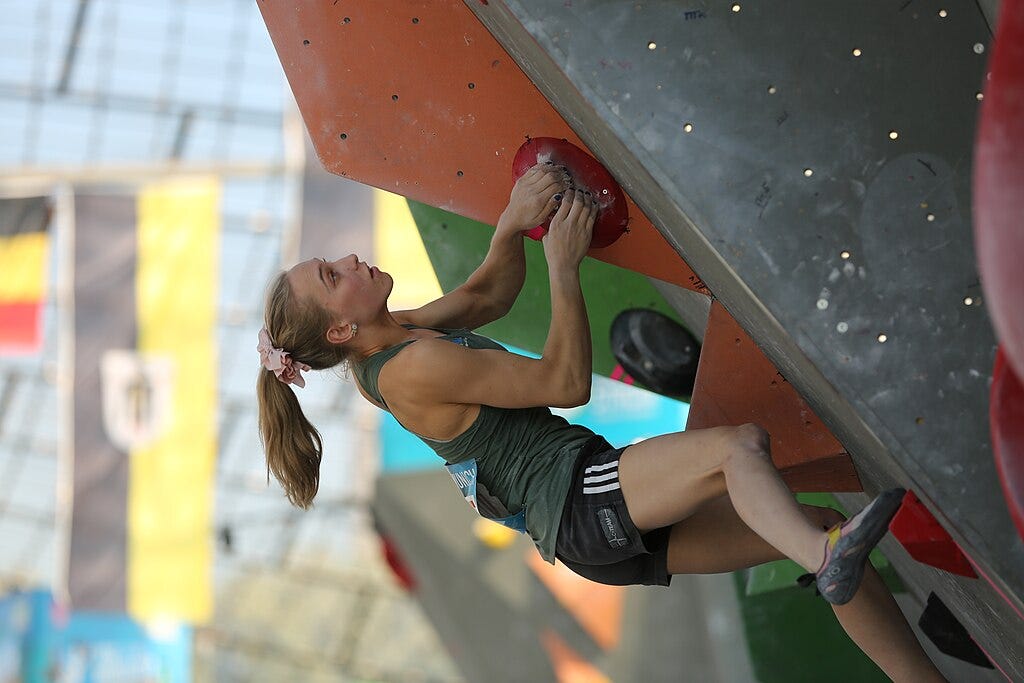
Enter Oriane Bertone. Spirited, outgoing, and driven, Bertone is a rising star in the sport. Just 20 years old, she represented France in her home Olympic Games in 2024 where she finished a respectable 8th, but she’s upped her game since then and is coming on leaps and bounds. While the problem set for the two finalists in the women’s competition was clearly not challenging enough to provide the spectacle that would have pushed the viewing experience to the next level, an uncommon error from Garnbret saw her fall part way through her first attempt on the boulder, allowing Bertone a free run at flashing the problem (completing it on her first attempt). Flash it she did, and in doing so upset the pre-competition odds and struck a blow to Garnbret’s invincible veneer.
Young, up and coming French star beats all-conquering Slovenian? Does this script feel in any way portentous? No further comment required.
On the men’s side I don’t really have a cycling analogy but I urge you to seek out the men’s final, if you have the inclination, to enjoy the best bit of the whole competition (the coverage was free on Red Bull TV but quite hard to pick through – the only YouTube footage I can find is this short summary.
The two finalists were both somewhat unexpected, with top seed Tomoa Narasaki clearly not on his best form. Instead third seed Colin Duffy, a talented American competition climber, took on Scotland’s own Max Milne, a wildcard entry who put on a show to make it through to the final, beating some quality competition along the way.
For a start, the problem they were set was far more challenging, with the pair both taking their time tackling the series of tricky moves on what was designed to be a powerful, dynamic boulder. In the end, it became a war of attrition. Milne’s diminutive height served as a disadvantage as he repeatedly manoeuvered himself into the right position, jamming his hands in between volumes, only to be unable to reach for the bigger hold that would allow him to bridge through to the hold above, ensuring he would finish higher than Duffy as the clock ran down.
Milne’s comportment throughout the final was a joy to behold. He geed the crowd up in a very British, tongue-in-cheek, almost apologetic way (they responded enthusiastically because what we Brits lack in individual confidence we make up for in collective fervour at sporting events), and his demeanour was that of someone just there to have a good time and do his best. Climbers in general are pretty chill folk, but Milne is prime among them. Yet it didn’t stop him digging so deep he bloodied his knuckles with the effort, his determination finally paying off as he inched his fingers around the hold that would make the difference, to seal the win.
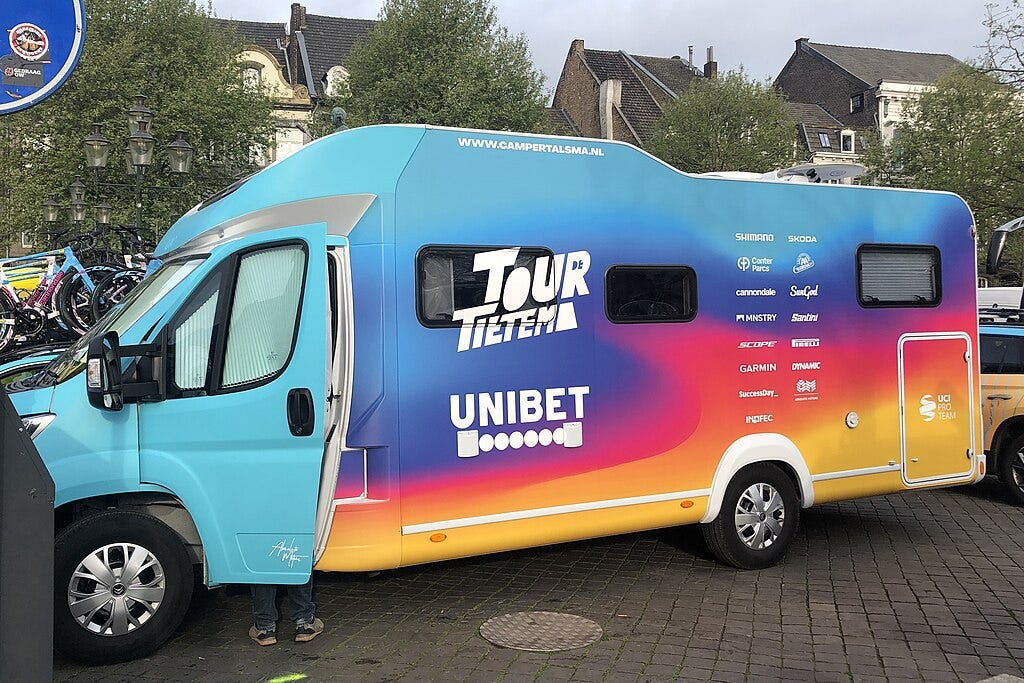
The grit, resilience, skill and personality that Milne displayed in such a short space of time delivered such a bang for the buck that it made the whole drawn out viewing experience all worth it. It was a reminder of the importance of character, in an era defined increasingly by sports people who speak in soundbites and are ruled by data. Milne stands out even within a fringe sport which attracts more than its fair share of quirky individuals. It’s a further reminder, when a plethora of sporting delights compete for our attention, that fan loyalty still hinges on split second moments, forged on one feat of incredible skill, or dogged endurance, or whimsical personality. I will cheer for Max every time I see him because of those five minutes of competition. Lifetimes of loyalty can turn on a sixpence, and the hearts of sports fans can be easily won. What point am I trying to make? I guess that it’s probably not as hard as it seems, to secure a fanbase. Just look at what the Unibet Rose Rockets are doing for the perfect example of this kind of investment on a team-wide scale. When you can choose anyone to lend your support to, why wouldn’t you choose a rider or team who go the extra mile?
You’ve given me a new way to interpret Kuurne!
Thanks for this—you happen to have focused on the two sports in which I have taken part, albeit my climbing experience is nearly all on the outdoor crags, using climbing walls only for training. Competition climbing was a weird fringe thing mostly confined to former Soviet-bloc countries. I still find speed climbing more amusing than exciting, but I do really appreciate the skill, strength, and agility required for boulder and lead.